Challenges in Attending International Conferences
 Admin
Admin
November 14 , 2025
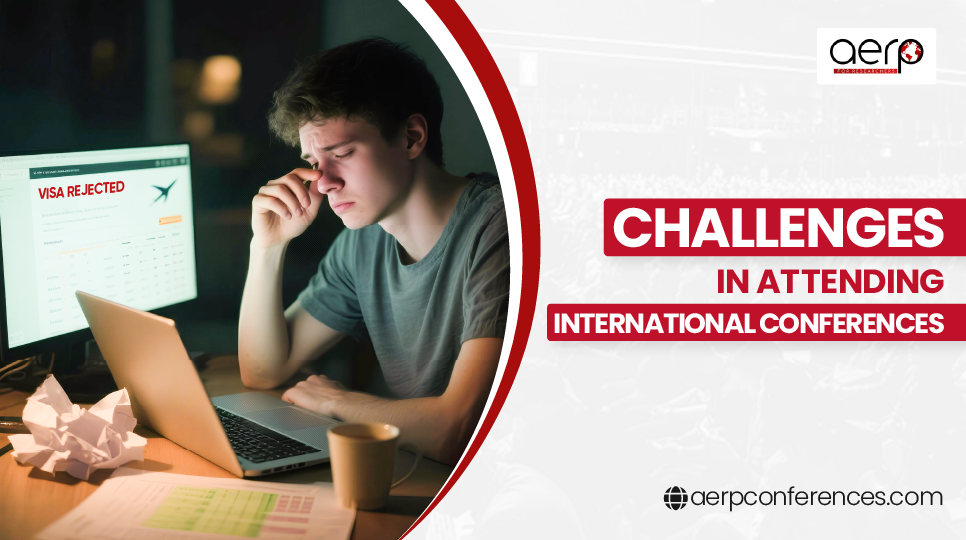
Finding the right event, networking anxiety, conflicting scheduled events, and navigating the host city – these are some of the biggest challenges when it comes to attending international conferences and summits.
In this blog, we’ll discuss these and other challenges in international conferences, ways to overcome them, and some pro tips. So, let’s begin:
Why Attending International Conferences is a Game-Changer?
Attending upcoming international Conferences 2025-2026 offers many professional and career-related benefits that can lead you towards growth. Here is how:
- Engage with experts: International conferences are led by experts in your field. There are keynote speakers who are specialists, leaders, or innovators in the subject or theme of the event. Additionally, these leaders come from diverse backgrounds worldwide. So, you can expect a next-level learning experience.
- Present your findings: Are you a researcher or innovator with some unique ideas or research findings? Conferences in 2025 – 2026 can provide an excellent platform to get your voice heard, as well as gain feedback and recognition for your work. Based on the feedback, you can improve your work, win funding opportunities, or seek partners—all of which can be game-changing for your project.
- Grow or build your network: International conferences are a great avenue to connect with peers, mentors, and leaders in your field. You can connect with like-minded people who can add huge value to your research or professional journey.
- Explore a new destination: When you attend an international conference, you often visit a new country. So, besides fulfilling your career goal, you can explore a new city, a new culture, and new perspectives.
All of these benefits certainly give a new direction to your research or profession.
Challenges of attending international conferences
Now, coming to the main point, let’s discuss the top challenges you might face when attending international summits and conferences:
Visa and Travel Documentation
Getting visas and necessary permits can be a nightmare, with long waiting periods and a lengthy list of required documents. Sometimes, a visa delay or refusal could easily mean the loss of the opportunity. Even if this is successful, time and money can be wasted on obtaining documents, visiting embassies, and so on before ultimately leaving.
High Travel and Accommodation Costs
Flights, accommodations, and in-destination transportation are not budget-friendly. Participation fees can be expensive, and when factoring in meals, insurance, and exchange rates, the total cost can rise quickly.
Language Barriers
Language can be a major barrier to networking and complete participation. Working through an interpreter can lead to the loss of flow, making conversations awkward. Additionally, non-native speakers may struggle to follow territory-specific sessions or engage meaningfully with others.
Time Zone Fatigue
If you fly across multiple time zones, jet lag can lead to poor sleep and reduced mental acuity. When our internal clock is out of whack, concentration, energy, and productivity all take a hit. This can detract from the value of the conference, particularly if it’s back-to-back and packed with intense sessions.
Networking Difficulties
Conferences are intended for connection, but we understand that forming impactful relationships can be challenging. Cultural reluctance, language barriers, and numerous other time demands can hinder your ability to network. Particularly, first-timers may be intimidated to approach groups of veteran professionals, keeping them from potential collaborative and mentorship opportunities.
Information Overload
International conferences often consist of parallel sessions, workshops, or panels. With such an abundance of programs to choose from, you may face difficulty choosing what to attend. If we try to cram all of this in, it can leave us feeling tired and reduce our ability to remember.
Finding the right event
Numerous international summits and conferences are being advertised worldwide. Therefore, it’s challenging to determine which ones are legitimate and worth attending. With so many programs, speakers, and reputations to consider, it takes a lot of time and discernment to know that your efforts and money were worthwhile.
Navigating the host city
Once they arrive, attendees must navigate unfamiliar local transportation, currency, and logistics. Misreading schedules or getting lost can result in missed sessions or anxiety. Even simple activities — ordering food or finding a ride to the airport, say – can be daunting in an unfamiliar place. This is particularly true when language barriers and cross-cultural confusion are present.
Remembering names and research topics.
When you meet dozens or even hundreds of people across a few days, it can become hard to remember names, organizations, or research focuses. Little things can tell you that could lead to awkward conversations or lost connections.
How to overcome challenges in international conferences?
Every problem and challenge has a solution. So, let’s discover the ways to overcome the challenges you might face during the upcoming international conferences 2025-2026:
 Subscribe to a reliable conference listing: Discover and subscribe to a reliable international conference alert website like www.aerpconferences.com. As a result, you’ll receive alerts (complete with details) for any upcoming event directly into your inbox. You can also log on to these websites and use filters to search by country, city, month, or conference topics.
Start preparations as early as possible: This means deciding upon the event you want to attend, registering as an early bird, applying for the visa, and obtaining other permits in a timely manner. This will help avoid last-minute stress and increase your chances of visa approval because you’ll have enough time to be prepared carefully while avoiding mistakes.
Practice language basics or use translation apps: Learn the most commonly used language phrases to make conversation more friendly. For professional interactions, consider investing in a reliable translation app or device that can help bridge language gaps. So, you can ask the questions, engage with presentations, and network without feeling left out of conversations.
Ascertain the conference credentials: Look into the past editions of an event, the quality and trustworthiness of speakers, and previous proceedings. Examine who the organizers are and try to find feedback from participants. By doing this, you’re investing your time and money into a professional, reputable conference rather than one that may be poorly run or predatory.
Arrive one or two days early: Jet lag can make you tired and disoriented. If you get there a day or two early, the time will be just about enough for your body to adapt on its own. This buffer can help decrease jet lag, let you acclimate to your room and locale, and be focused during sessions.
Get to know the host city maps and apps: Look at local maps, download transportation apps, and review some local guides in advance of your departure. Getting familiar with major routes, landmarks, and travel options reduces stress and the potential of missing an appointment. This readiness can also help you to navigate the city with confidence, enhancing both professional and personal experiences.
Download a note-taking app: Conferences are all about meeting a lot of people at once. Memory efforts have to be repeated, and things become confused later on. Keep a notebook or digital contact app and jot down names, affiliations, and areas of research. These notes make follow-up emails a breeze, and help you foster better professional relationships after the event.
Pro tips to prepare for International conferences
Here is a quick list of pro tips to get ready for international conferences:
- Prepare your visa, travel documents, and other important papers in a sturdy folder.
- Book your hotels and flights early for better pricing. See if you can find accommodation near the venue of the event.
- Often have an elevator pitch about your work or interests when networking.
- Keep your social media profiles, particularly your LinkedIn profile, updated.
- Carry plenty of business cards, and they must mention your phone number, email address, and website.
- Use the internet to get familiar with the cultural and religious etiquette followed in the host country.
- Pack business clothing for formal presentations as well as casual mixers.
- Download apps for translation, local map, and transportation apps ahead of your arrival in the host country.
- Bring presentations or posters as backups on a password-protected USB drive and the cloud.
- Pack a small first aid kit with essential medications and travel insurance information in case of an emergency.
- Schedule time to recover from jet lag.
- Budget for extra expenses, like meals, taxis, or even conference materials.
- Maintain contact with coworkers by sharing schedules or group chatting.
Conclusion
Of course, there are some noticeable challenges in attending international conferences. But, with proper planning, you can easily overcome these challenges and maximize your experience at these international events. Start with preparation and planning. Once planned and attended successfully, you’ll acquire knowledge that will not only contribute to your professional growth now, but also serve you for years to come.
Are you planning to attend the upcoming international conferences 2025-2026?
Hopefully, this blog will help you plan properly and avoid possible obstacles. Subscribe to AERP Conferences to stay ahead of upcoming international summits and conferences in your field of research.
FAQ
Why is attending international conferences difficult?
Attending international conferences can be difficult due to a lack of planning and preparation. Because the event takes place in another country and is attended by unknown people from around the world, planning and preparation can make things easier and smoother.
What are the biggest barriers for researchers attending conferences abroad?
Some of the biggest barriers for researchers attending conferences abroad include unfamiliarity with the host city, struggling with making visa and permit arrangements, networking anxiety, and language barriers.
How to attend international conferences ?
To attend international conferences, you must first find the right and credible event to attend. Register for it, apply for a visa to the host country as early as possible, and make travel arrangements. Also, pack all necessary documents, research about the event, and don’t forget to carry your stationery (physical and digital).
What happens in international conferences?
In international conferences, you can expect keynote sessions from leaders of your industry, presentations from peers, and panel discussions. You can also attend workshops and participate in poster presentations, depending on the programs included.